Slow Burn belicht de meest ingrijpende momenten in de Amerikaanse geschiedenis, om het verleden te doorgronden en zo het heden beter te begrijpen. Met behulp van archiefmateriaal en interviews met ooggetuigen onthult deze bekroonde serie verrassende gebeurtenissen en weinig bekende personages die schuilen binnen de grootste verhalen van onze tijd.
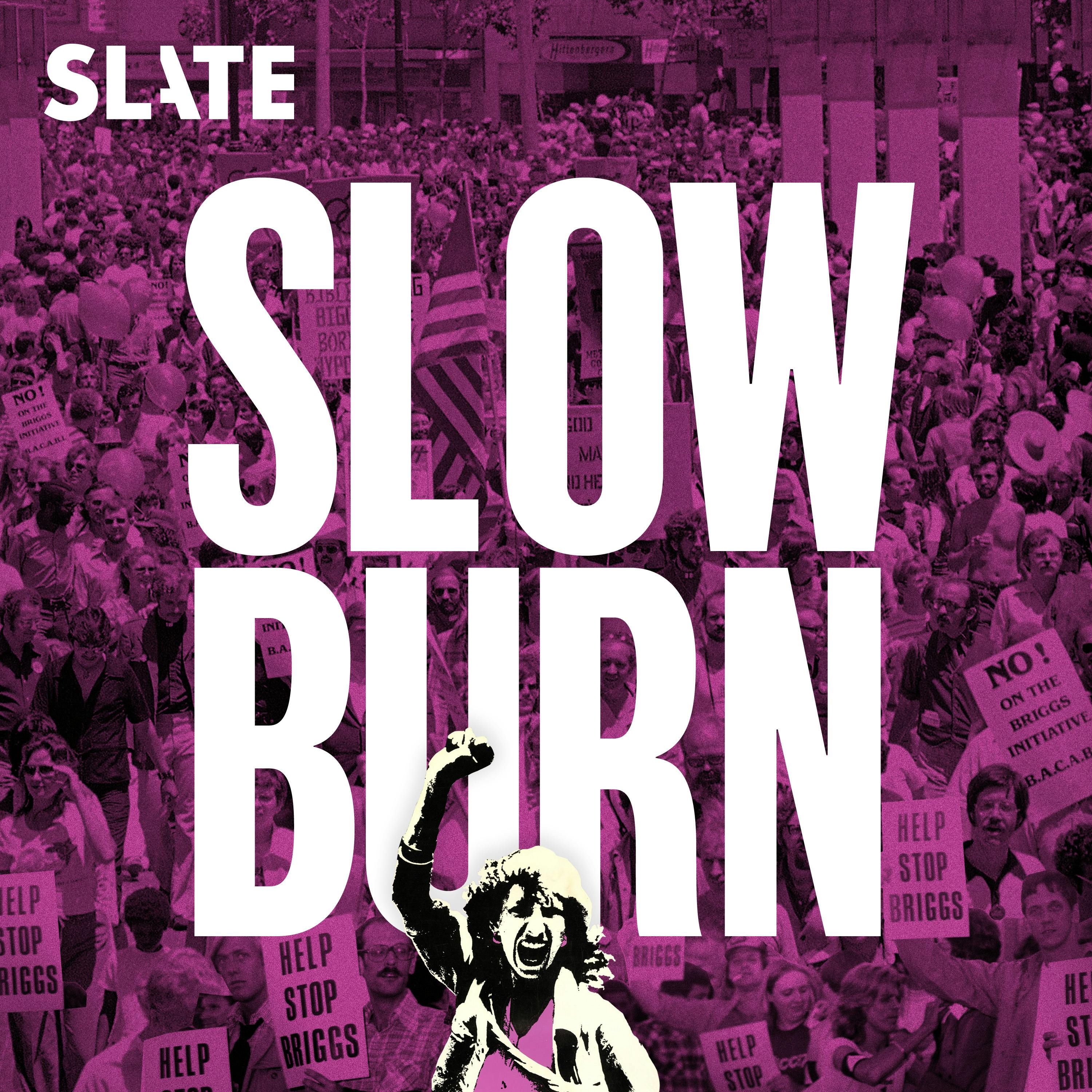
In 1978, state Sen. John Briggs put a bold proposition on the California ballot. If it passed, the Briggs Initiative would ban gays and lesbians from working in public schools—and fuel a growing backlash against LGBTQ+ people in all corners of American life. In the ninth season of Slate’s Slow Burn, host Christina Cauterucci explores one of the most consequential civil rights battles in American history: the first-ever statewide vote on gay rights. With that fight looming, young gay activists formed a sprawling, infighting, joyous opposition; confronted the smear that they were indoctrinating kids; and came out en masse to show Briggs—and their own communities—who they really were. And when an unthinkable act of violence shocked them all, they showed the world what gay power looked like.
Want more Slow Burn? Join Slate Plus to immediately access all past seasons and episodes of Slow Burn (and your other favorite Slate podcasts) completely ad-free. Plus, you’ll unlock subscriber-exclusive bonus episodes that bring you behind-the-scenes on the making of the show. Subscribe now on Apple Podcasts by clicking “Subscribe” at the top of our show page. Or, visit slate.com/slowburnplus to get access wherever you listen.
Season 8: Becoming Justice Thomas
Where Clarence Thomas came from, how he rose to power, and how he’s brought the rest of us along with him, whether we like it or not. Winner of the Podcast of the Year at the 2024 Ambies Awards.
Season 7: Roe v. Wade
The women who fought for legal abortion, the activists who pushed back, and the justices who thought they could solve the issue for good. Winner of Apple Podcasts Show of the Year in 2022.
Season 6: The L.A. Riots
How decades of police brutality, a broken justice system, and a video tape set off six days of unrest in Los Angeles.
Season 5: The Road to the Iraq War
Eighteen months after 9/11, the United States invaded a country that had nothing to do with the attacks. Who’s to blame? And was there any way to stop it?
Season 4: David Duke
America’s most famous white supremacist came within a runoff of controlling Louisiana. How did David Duke rise to power? And what did it take to stop him?
Season 3: Biggie and Tupac
How is it that two of the most famous performers in the world were murdered within a year of each other—and their killings were never solved?
Season 2: The Clinton Impeachment
A reexamination of the scandals that nearly destroyed the 42nd president and forever changed the life of a former White House intern.
Season 1: Watergate
What did it feel like to live through the scandal that brought down President Nixon?
Lawn ornaments are everywhere—but for something so ubiquitous, they’re also mysterious. What’s the person with the flamingo or the gargoyle in their yard trying to say—and why do they want to say it so publicly? From the garden-variety to the not so common, the adorable to the odious—lawn ornaments speak volumes, without saying a word. In this episode, we travel from Germany to England and back home to look at the history and meaning behind three specific lawn ornaments: the garden gnome, the lawn jockey, and the 18th century ornamental hermit.
You’ll hear from historian Twigs Way, Sven Berrar of the Zwergstatt Gräfenroda, David Pilgrim of the Jim Crow Museum, Kenneth Goings who is an emeritus professor at the Ohio State University, and art historian Ned Harwood.
This episode was written by Evan Chung and Willa Paskin. It was produced by Evan Chung. We produce Decoder Ring with Katie Shepherd and Max Freedman. We had additional production from Cheyna Roth and Martina Weber. Derek John is Executive Producer. Merritt Jacob is Senior Technical Director.
Thank you to Friedemann Brenneis, Heather Joseph-Witham, and Elise Gramza.
If you have any cultural mysteries you want us to decode, email us at DecoderRing@slate.com.
If you love the show and want to support us, consider joining Slate Plus. With Slate Plus you get ad-free podcasts, bonus episodes, and total access to all of Slate’s journalism.
Learn more about your ad choices. Visit megaphone.fm/adchoices